

Sectional Versus Roll Up Doors for Houston

A garage door that takes up too much ceiling room, rattles every time it opens, or leaves a loading area exposed can quickly become more than an inconvenience. When comparing sectional versus roll up doors, the right choice comes down to the building, the available space, daily use, and the level of protection you need. Houston property owners also need a door system that can stand up to heat, humidity, storms, and frequent operation.
Both door styles provide dependable access when they are properly installed and maintained. But they are built differently, move differently, and serve different priorities. Understanding those differences before a replacement or new installation can prevent costly changes later.
Sectional versus roll up doors: the key difference
A sectional door is made of separate horizontal panels connected by hinges. As the door opens, the panels travel upward on tracks and rest overhead, typically parallel to the ceiling. Most residential garage doors are sectional doors, although insulated commercial sectional doors are also common.
A roll up door is built from narrow steel slats or a continuous steel curtain. Instead of moving along ceiling-mounted horizontal tracks, it coils into a compact roll above the opening. Steel roll-up doors are frequently used for warehouses, storefronts, storage facilities, service bays, and other commercial spaces.
The simplest distinction is this: sectional doors need room inside the garage or building for tracks and overhead travel. Roll up doors need headroom above the opening for the curtain to coil. Neither design is automatically better. The best option depends on the structure and how the opening is used.
When a sectional door makes sense
For most attached and detached Houston homes, a sectional door is the practical choice. It offers a wide range of styles, from traditional raised-panel steel doors to modern flush-panel and window designs. That flexibility matters when curb appeal and property value are part of the decision.
Sectional doors can also be insulated effectively. Insulated steel panels help reduce heat transfer into the garage, which is especially useful when the garage shares walls with living space, contains a workshop, or stores temperature-sensitive equipment. Insulation will not turn a garage into conditioned living space, but it can make a noticeable difference in comfort and help the opener and door system operate more consistently.
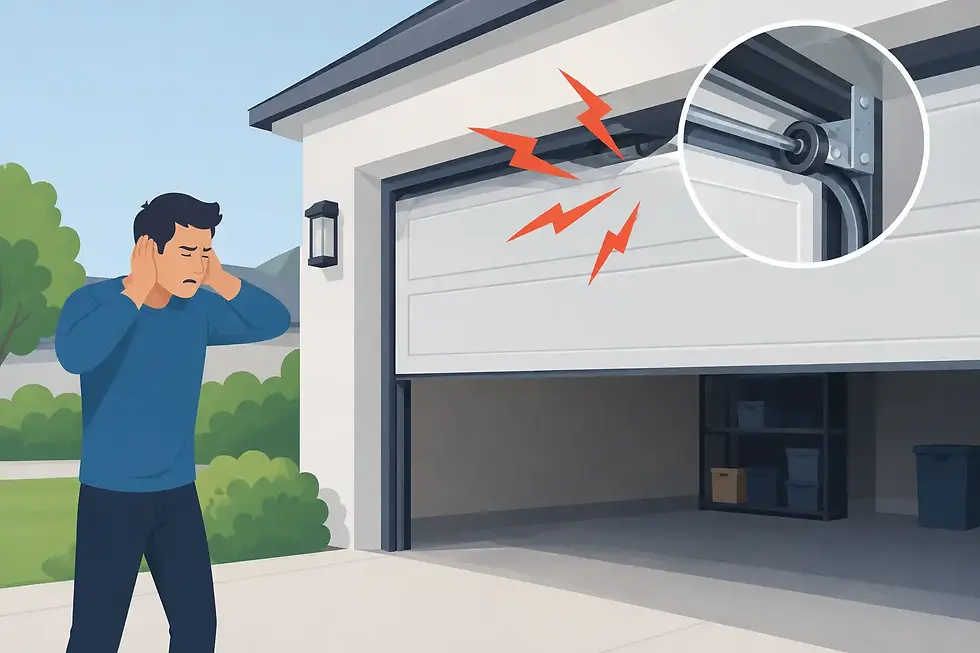
A sectional door is usually the better fit when you want a quiet, automated residential system. With quality nylon rollers, correctly balanced torsion springs, and a modern opener, the door can operate smoothly with far less noise than an aging system with worn metal rollers or damaged tracks.
There are trade-offs. Sectional doors have more moving parts, including panels, hinges, rollers, cables, tracks, springs, and an opener in many cases. Any one of these components can affect operation. A bent track, broken spring, frayed cable, or damaged panel should be addressed promptly, particularly because garage door springs and cables carry significant tension.
Best uses for sectional doors
Sectional doors are generally well suited to residential garages, climate-conscious workspaces, fire stations, automotive service bays, and commercial buildings where insulation, appearance, and frequent automated use matter. They also work well for properties that have adequate ceiling clearance and room for horizontal tracks.
When a roll up door is the better fit
Roll up doors are designed for durability and efficient use of interior space. Because the curtain coils above the opening, there are no horizontal tracks extending deep into the ceiling area. This can be a major advantage in a commercial facility with overhead shelving, lighting, sprinkler lines, lifts, cranes, or limited backroom clearance.
For warehouses, loading zones, storage units, retail security openings, and equipment enclosures, a steel roll-up door provides a strong physical barrier without consuming valuable interior space. Many commercial property managers prefer this design because it keeps the door mechanism compact and out of the way of daily operations.
Roll up doors are also a sensible option for openings that need a tougher, more utilitarian appearance. Their steel curtains are built for repeated use and security, particularly when paired with the appropriate locking hardware and operator system. A manually operated roll-up door may suit a low-use storage opening, while a motorized operator can keep busy commercial access points moving efficiently.
The trade-off is that roll up doors are usually less focused on residential style and broad window options. Insulation may be available, but the performance and construction options differ from insulated sectional panels. They can also create noticeable operating noise if guides, slats, springs, or operators are worn or improperly adjusted.
Best uses for roll up doors
Roll up doors are often the right choice for commercial storage, warehouses, storefronts, industrial work areas, parking structures, concessions, and security-sensitive openings. They are especially useful where ceiling space inside the building cannot be dedicated to a sectional door’s track system.
Compare space, security, insulation, and maintenance
The opening itself is only one part of the decision. Before choosing a door, look at how the entire space functions.
Available clearance: A sectional door needs headroom, side room, and depth inside the garage for its track system. A roll up door needs sufficient headroom above the opening for the coil and brackets. Measurements should be taken before ordering a replacement, not after a door has been selected.
Security needs: Both styles can provide reliable security when made from quality steel and fitted correctly. For commercial openings, a roll-up door often has the advantage of a compact steel curtain and heavy-duty construction. For homes, a sectional steel door with a modern opener, secure bottom seal, and functioning lock system offers dependable protection for vehicles and belongings.
Temperature and weather: Houston heat makes insulation worth considering, especially for attached garages and conditioned commercial areas. Sectional doors typically offer more insulation choices and stronger thermal separation between panels. Weather seals are important on either system to limit wind-driven rain, dust, pests, and outside air.
Service requirements: Sectional doors need periodic inspection of springs, cables, rollers, hinges, tracks, and opener safety features. Roll-up doors require attention to slats or curtain alignment, guides, counterbalance components, brackets, fasteners, and operators. In both cases, scheduled maintenance helps identify small issues before a door becomes stuck, off track, or unsafe to operate.
Choose based on daily operation, not only price
The lowest initial price is not always the lowest long-term cost. A door that does not fit the way a property operates can create recurring repair needs, workflow problems, and premature wear.
For example, a homeowner replacing an old two-car garage door may benefit most from an insulated sectional door with a quiet belt-drive opener and smart controls. A warehouse operator with tall equipment and a narrow interior layout may need a steel roll-up door that keeps the ceiling area clear. A retail property may prioritize a roll-up security door behind a storefront opening, while an auto shop may choose insulated sectional doors for service bays where light, appearance, and frequent access are important.
The expected number of cycles matters as well. A door used twice daily has different demands than one that opens dozens of times during a business shift. Commercial-duty springs, operators, and hardware should be matched to the frequency and weight of the door. This is not a place for guesswork, especially when employee safety and business access are involved.
Installation details that protect your investment
Even the right door will not perform well if the system is poorly installed. Tracks must be aligned, springs properly sized and balanced, cables correctly routed, and safety systems tested. For automated doors, the opener must be matched to the door’s weight and use level, while photo-eye sensors and reversing functions need to work correctly every time.
Older garages can present added challenges. Low headroom, damaged framing, uneven floors, outdated hardware, or a previous door conversion may affect what can be installed. A professional site assessment identifies these conditions early and provides a clear path forward rather than forcing a door system into a space where it does not belong.
At A.C.J Houston Garage Doors, licensed and insured technicians help homeowners and commercial property teams evaluate door type, hardware, safety requirements, and practical installation details. Clear communication and honest pricing matter whether the job involves a single damaged panel, a commercial roll-up door repair, or a complete replacement.
Make the choice with the opening in front of you
A sectional door is often the best blend of appearance, insulation, and everyday convenience for Houston homes. A roll-up door is often the more efficient choice for commercial security and tight interior clearances. The deciding factor is not the label on the door. It is whether the system supports safe, reliable access for the way your property actually operates.
Before committing to either style, have the opening measured, the structure inspected, and the expected use discussed with an experienced garage door professional. A well-matched door can protect your property, keep daily routines moving, and save you from dealing with an avoidable access problem later.


Comments