

Commercial Doors That Keep Houston Businesses Moving

A commercial door that will not open at 7 a.m. can delay deliveries, leave employees waiting outside, and put inventory at risk before the workday even starts. For Houston businesses, commercial doors are working equipment - not background features. They need to open reliably, close securely, and stand up to frequent use, changing weather, and the demands of the property.
Whether you manage a warehouse in Cypress, run a retail shop in Katy, or oversee a multi-tenant property in Sugar Land, the right door system helps protect your building and keep operations on schedule. Knowing when to repair, maintain, or replace that system can prevent a small mechanical issue from becoming an expensive interruption.
What Commercial Doors Need to Do Every Day
Commercial garage doors, overhead doors, and steel roll-up doors are built around a practical job: controlled access. They allow vehicles, equipment, shipments, employees, and customers to move through the property while helping keep unauthorized entry, weather, and damage out.
That job looks different from one facility to another. A warehouse door may cycle dozens of times per day and need clearance for delivery trucks. A storage facility may prioritize dependable roll-up door operation and secure locking. A repair shop may need a door that opens quickly, has clear visibility, and can handle the daily movement of vehicles. Retail and commercial properties may need doors that balance security with a clean exterior appearance.
The best setup depends on the opening size, traffic pattern, building use, wind exposure, security needs, and available headroom. A door that is right for a low-use storage area may not hold up at a busy loading zone. That is why commercial door decisions should begin with how the property actually operates, not simply the door style.
Common Commercial Door Problems That Disrupt Business
Most door failures give warning signs before the system stops working completely. Ignoring those signs often leads to more damage because commercial door components work together under significant tension and weight.
A door that moves unevenly, shakes during travel, or comes off track may have worn rollers, bent tracks, cable damage, or an alignment issue. A door that feels unusually heavy or will not stay in position can point to a broken torsion spring. Springs counterbalance the door's weight, and a failed spring can make the door unsafe to operate manually or with an opener.
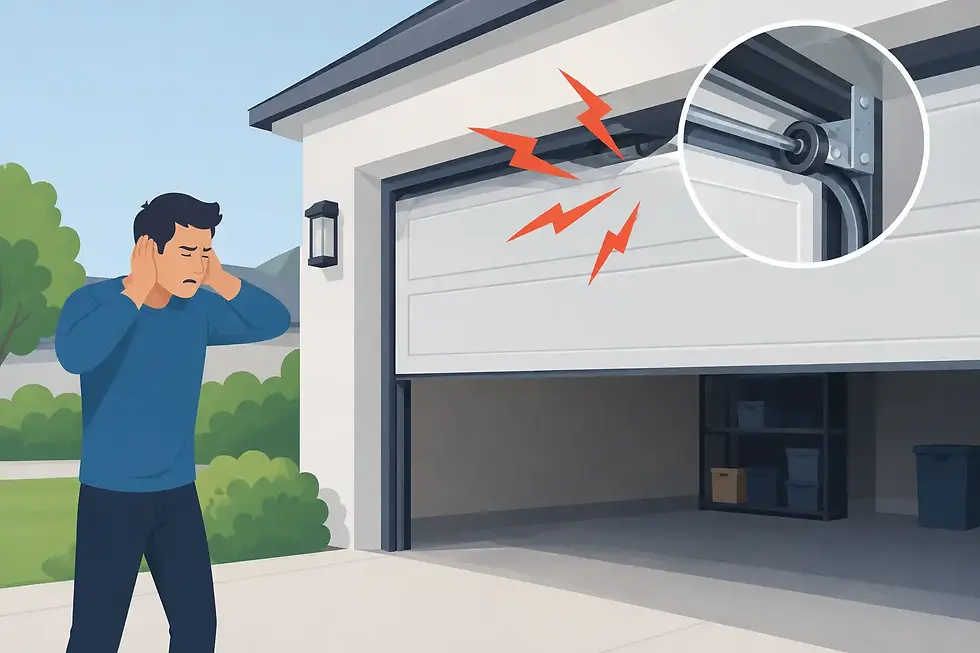
Unusual grinding, squealing, or popping noises are also worth addressing early. Noise may come from dry or damaged rollers, loose hardware, worn bearings, or opener strain. The cause may be minor, but continued use can put extra pressure on the motor, tracks, and other moving parts.
Security concerns require the same urgency. If a commercial door does not close fully, has damaged panels, or has a malfunctioning opener, the building may be exposed after hours. For businesses storing tools, inventory, vehicles, or customer property, a door issue is not only a maintenance problem. It is a property protection concern.
Repair or Replacement: How to Make the Right Call
Repair is often the sensible choice when the door itself is in good condition and the problem is isolated. Replacing broken cables, worn nylon rollers, damaged hinges, malfunctioning safety sensors, or a failing opener can restore safe operation without replacing the entire system.
Replacement becomes more practical when the door has repeated breakdowns, severe panel damage, widespread rust, major track damage, or parts that are no longer readily available. An older door may also lack the insulation, security features, or opener compatibility needed for the business today.
Cost matters, but the lowest immediate price is not always the best value. A series of short-term repairs on a failing door can create recurring downtime and increasing labor costs. On the other hand, replacing a door with years of useful service left may not be necessary. A qualified technician should explain the condition of the door, identify the failed components, and provide clear options before work begins.
For facilities with multiple doors, it can also make sense to plan replacement in phases. This allows a property manager to address the highest-risk openings first while budgeting for the remaining work over time.
When an Opener Upgrade Makes Sense
The door and the opener should be evaluated together. A modern commercial opener can improve daily convenience, but it cannot compensate for a damaged, unbalanced, or poorly maintained door.
If an opener struggles, reverses unexpectedly, operates inconsistently, or cannot keep up with the door's usage level, service may be needed. In some cases, adjustment or repair is enough. In others, a replacement opener with the right horsepower, duty cycle, safety features, and access controls is the more dependable choice.
Smart-enabled opener options can also benefit certain businesses by allowing authorized users to monitor or operate access from a phone. That convenience should support, not replace, proper physical security and regular mechanical maintenance.
Why Preventive Maintenance Matters for Commercial Doors
A commercial door may appear to work normally while important components are wearing down. Preventive maintenance is designed to catch those issues before they result in an emergency call, a blocked loading area, or a door that cannot be secured overnight.
During professional maintenance, a technician can inspect the springs, cables, rollers, tracks, hinges, fasteners, panels, bottom seal, safety sensors, and opener operation. The door can be checked for balance, proper travel, lubrication needs, and signs of metal fatigue or misalignment.
Houston weather adds another reason to stay ahead of maintenance. Humidity can contribute to corrosion, heat can affect materials and lubricants, and severe storms can expose weak panels, worn seals, and vulnerable hardware. Facilities near high-traffic roads may also deal with more dirt and debris in tracks and moving parts.
Maintenance schedules depend on use. A door that operates several times a day deserves more attention than one used only occasionally. High-cycle commercial doors may benefit from routine scheduled inspections, while lower-use doors should still be checked before small problems become larger ones.
Safety Is Not a Do-It-Yourself Repair
Commercial door systems contain heavy moving panels and high-tension springs. Cable and spring work can be dangerous without the correct tools, training, and procedures. For employees, the safest response to a door that is stuck, off track, or visibly damaged is to stop using it and keep the area clear until a professional can assess it.
Do not force a door open with a forklift, pull against a damaged cable, or continue running an opener that is straining. These actions can worsen the damage and create a greater safety risk for people and property.
A licensed and insured service provider should be able to explain what failed, what the repair involves, and what steps will help prevent the issue from returning. Clear communication matters when your team needs to plan deliveries, customer access, or temporary security around the repair.
Choosing a Commercial Door Service Partner in Houston
Commercial properties need more than a contractor who can arrive and replace a part. They need a local service team that understands the operational impact of a down door and can recommend durable solutions without unnecessary pressure.
Look for experience with overhead doors, steel roll-up doors, openers, springs, cables, tracks, panels, and complete replacements. Ask about emergency availability, material quality, scheduling, and whether the technician will provide a straightforward explanation of the issue and pricing.
A.C.J Houston Garage Doors provides commercial repair, installation, replacement, and maintenance services with a focus on safe operation, dependable access, and honest communication. When a door affects your ability to open, secure, or operate the property, timely professional service can protect far more than the opening itself.
If your commercial door is making new noises, moving unevenly, failing to close, or showing visible damage, schedule service before the next busy shift turns a warning sign into downtime.


Comments